🎙️Transcript: The SDR Chronicles #100
The SDR Chronicles
"Episode 100"
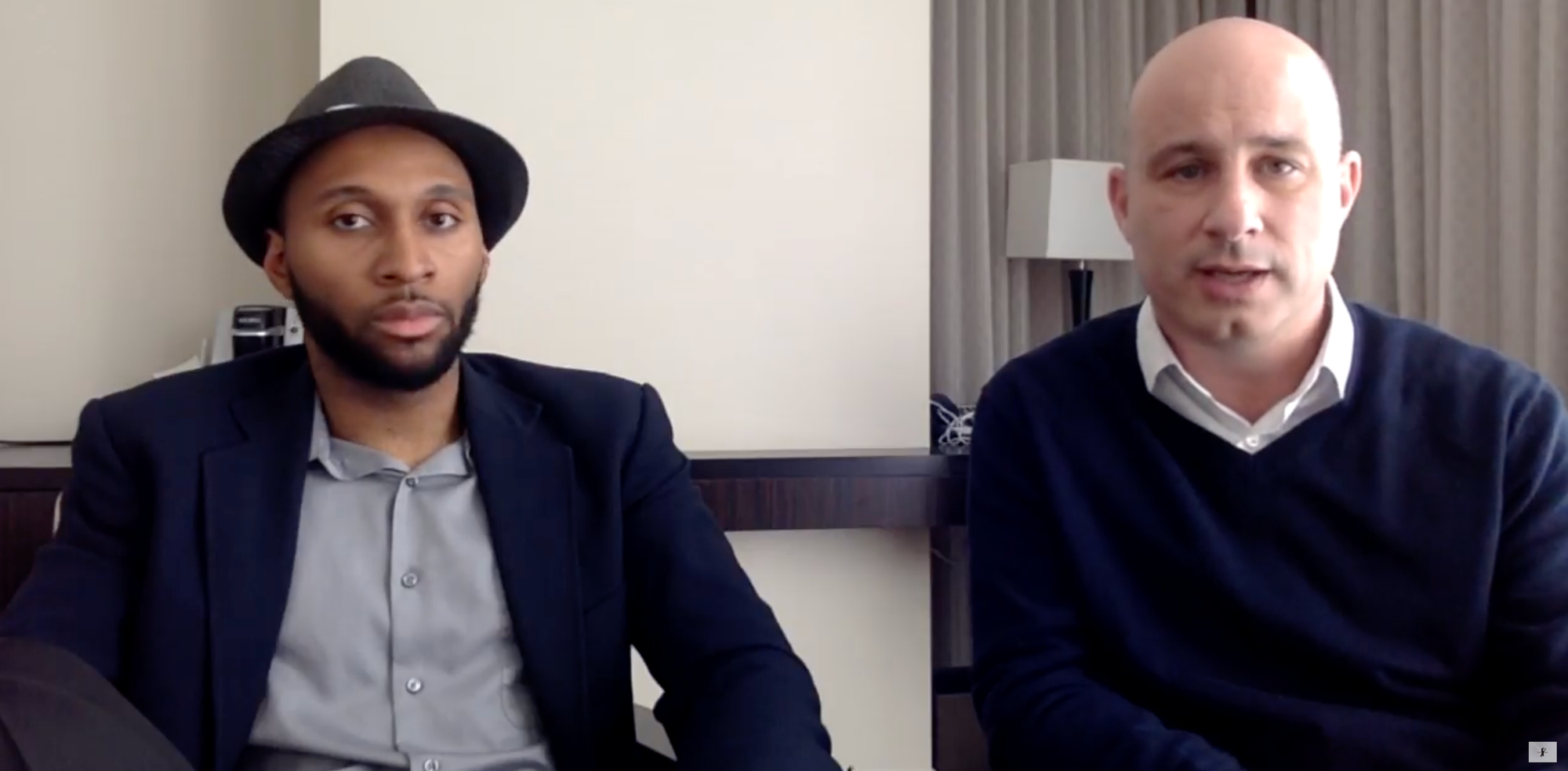
Morgan J. Ingram, Ralph Barsi
Summary
In this milestone hundredth episode of The SDR Chronicles, Morgan J. Ingram sits down with Ralph Barsi at the Rainmaker event in Atlanta to discuss building a personal brand, maintaining accountability, and thinking long term as an SDR.
Ralph shares the origin story of how he challenged SDRs to create video content documenting their daily experiences, which inspired Morgan to launch the show.
The conversation explores practical strategies for building a brand through content creation, the importance of mastering fundamentals before advancing to account executive roles, and why developing systems and habits trumps setting goals.
Throughout the discussion, both speakers emphasize the value of patience, discipline, and focusing on foundational skills that will serve professionals throughout their entire careers.
The episode celebrates Morgan's commitment to creating 100 episodes while highlighting the broader lesson that consistent value creation builds marketplace credibility over time.
BIG Takeaways
• Start Where Your Audience Lives and Leverage Your Strengths
Before creating content, identify where your target audience spends time and what format suits your natural abilities. If you're a strong writer, focus on blog posts or articles. If you're comfortable on camera, create videos. Don't force yourself into mediums that don't align with your strengths. Triple down on what you do best and deliver value through those channels consistently.
• Progress From A to B, Not A to Z
Building a brand doesn't require perfection or a massive launch. Start with one blog post, one video, or one article and build incrementally. Over time, these individual value nuggets stack into a mountain of credibility and expertise. The key is consistent forward movement rather than waiting for the perfect comprehensive strategy.
• Time Scarcity Is a Mindset, Not Reality
Everyone has the same 24 hours. Creating content and building a brand requires prioritization and focus, not finding extra time. Use tools like Brendon Burchard's one-page productivity planner to concentrate on people, projects, and priorities that matter most. When you focus relentlessly on what moves you toward your goals, time naturally opens up.
• Document Your Failures and Resilience
Audiences connect with authenticity and struggle, not just success stories. Share your daily experiences as an SDR, including bad calls, failed emails, and lessons learned from mistakes. People are inspired by resilience and the ability to get up, dust off, and move forward. This vulnerability builds stronger connections than polished success narratives alone.
• Master SDR Fundamentals Before Advancing to AE Roles
The typical path to account executive should take 18 to 24 months because mastering sales development fundamentals is essential for long-term success. SDRs who rush into AE roles without learning proper prospecting, lead follow-up, and early-stage deal management often struggle, end up on performance plans, and repeat the cycle at other companies. The bounce pass and chest pass must be mastered before attempting flashy plays.
• Fundamental Skills Serve Your Entire Career
The prospecting, follow-up, and relationship-building skills learned in SDR roles don't disappear when you become an AE, VP, or CEO. Today's top executives still prospect for board members, investors, speaking opportunities, and partnerships. These foundational abilities compound over time and become increasingly valuable as your career progresses. Even Steph Curry warms up with fundamentals before every game.
• Winners Have Systems, Losers Have Goals
Goals alone won't create success. Develop disciplined habits and repeatable systems that you execute consistently regardless of motivation or circumstances. Daily disciplines and processes trump aspirational targets every time. Create routines around your fundamentals and the results will follow naturally as a byproduct of your systems.
Transcript
Ralph Barsi (00:00):
One of my favorite quotes: "Losers have goals and winners have systems." Systems always trump goals, trust me. So develop those habits and you'll benefit from them probably tenfold.
Morgan J. Ingram (00:32):
Hey everybody, this is Morgan J. Ingram here. I have Ralph Barsi on the hundredth episode all the way from San Fran.
Ralph Barsi:
What's up, Morgan? Thanks for having me.
Morgan J. Ingram:
Just kidding guys. We're actually in Atlanta here for the Rainmaker event. We're here for the hundredth episode. Super excited and we're really going to talk about how to build a brand, how to stay accountable, how to think long term as an SDR. So I'm going to let Ralph introduce himself and then tell you guys how he got here on this episode.
Ralph Barsi (01:00):
What's up everybody? So yeah, this looks like a split screen. That's why we actually are sitting next to each other. It's crazy. It's great to be in Atlanta. I'm Ralph Barsi. I wrote an article for Sales Hacker close to two years ago now, maybe a year and a half ago.
(01:13):
And in that article, it was about how SDRs can overcome obscurity. One of the biggest problems all of you have in our industry is not many people know who you are. So it's really important to focus on building your brand and putting value into the marketplace so that in return you become more valuable to that marketplace. So I challenged SDRs in that article and I asked, "Hey, if anybody's out there that wants to put together a video channel for SDRs, by an SDR, chronicling the day-to-day life of being a sales development rep in the industry, let's see it." So Morgan was the first one and ended up being the only one who reached out to me with, at first it was a tweet, a video tweet saying, "Hey, I'm your guy. I'm the one who can handle this." And I was all fired up about it.
(02:03):
And then a couple weeks later, I actually saw him in Atlanta and we met in person for the first time and he hadn't done anything yet.
Morgan J. Ingram (02:10):
It was at Rainmaker.
Ralph Barsi (02:12):
Yeah, it was at Rainmaker in 2016.
Morgan J. Ingram (02:14):
2016.
Ralph Barsi (02:15):
And so I walked up to Morgan and I was all excited about the tweet he had sent, but he still hadn't... The rubber had not yet met the road and he hadn't produced anything.
(02:23):
So I think that was the catalyst event for him to actually begin to execute, start filming his very first videos and boom, here we are at the hundredth episode. And as a result, Morgan's become a lot more valuable in the marketplace because he's been doing nothing but dropping little nuggets of value on each episode, having great guests, having great talk tracks, and talking about what's most important to help get all of you forward and to help you move the needle. And I couldn't be more happy for Morgan and I'm thrilled to be here on the hundredth episode. Thanks for having me.
Morgan J. Ingram (02:56):
Yeah, no, thanks for coming on. This is a super exciting moment. And so let's talk about, you talked about the value in the marketplace. You talked about how to build that value and give it out there. So how do you build your brand? Is it creating videos every single day? Is it blog posts? Someone right now who's like, "How do I build this brand? What should they do?"
Ralph Barsi (03:16):
Yeah. So one way to do it is by doing a video, but not everybody's comfortable on a video, right? Let alone building a YouTube channel and producing episodes on a regular basis. And that's okay. But what's really important is to find out first where your audience is. Who is it that you're trying to do business with? What audience are you trying to serve in the first place and where they live is that's where you could start to consider where you're going to do your work. So if you're a great writer, why are we not seeing more content from you? If you are a great speaker, why have we not yet seen you speak on stage or on video, for example? So I would encourage you to triple down on your strengths and start to put yourself out there. Go from A to B. You don't have to go from A to Z.
(04:03):
Just get one episode out or one post out or one article out a little bit at a time. And over time, you could have this nice little stack of value nuggets that turn into this mountain of value for people.
Morgan J. Ingram (04:16):
Awesome. And that mountain of value, let's kind of take a deeper dive into that. So if you're good at writing blogs, should you just be doing that every single day? Should you be doing that once a week? What does that look like? How do I start doing this? What if I don't have time to create content? What are you saying to...
Ralph Barsi (04:31):
These people? Well, you have the same amount of time as I do, and I have the same amount of time as you do and all of you do. So I mean, that's just not an excuse. I think time is, it's all in the mind. And I think you definitely have time and energy and effort to gather the content that you think is going to appeal most to your audience. And of course, it helps even more if it appeals to you too. And you could write about stuff that you know is going to resonate with certain people that you want to do work with or certain people that you work with today. So do you have to write a blog every day? I don't know. Maybe you do. Maybe you do have to write a blog article every day and it could be in the form of a diary about how your day as an SDR went and what you're not going to be doing next time because you fell on your face sending a particular email today or you had a bad call.
(05:21):
People want to hear about that stuff too. We want to hear about the failures because people are turned on by the resiliency of people getting up, dusting off and just carrying forward. So yeah, sometimes it takes the shape of writing every single day if you need to do that.
Morgan J. Ingram (05:35):
So yeah, if you're saying you don't have time, is it blocking out your schedule or removing certain things from your life? How do I create more time?
Ralph Barsi (05:41):
Yeah. So there are a couple ways to create more time. One is, in fact, I'm going to turn you on to the one page productivity planner and it's from Brendan Burchard. You could Google Brendan's name or Google one page productivity planner and you're going to get a PDF. And that PDF focuses you on in one page, the people that need to hear from you today and the people that you need to hear from today, the projects that you're working on, project one, two, three, can't really do more than that, and the priorities that are going on. So that if you're constantly focused on those pieces, the projects, the people and the priorities, it's going to help you better shape your day. And you'd be amazed how much time you can create as a result of being ultra focused on what matters most to getting you to your goal.
Morgan J. Ingram (06:27):
I love it. I love it. And yeah, guys, I think the biggest thing with brand also is kind of, Ralph said this is that you have to be yourself, right? If you find that, hey, look, these videos are awesome and you're not good at video, don't consider video. I mean, I'm really not good at writing. I despise writing, but I use my videos and I transcribe my videos into written forms so that people that are better, more readers can read my content. But I make the videos first because I know that's where I'm strong at. Even there's audio as well is also just documenting what you're doing. So I think that's really how you really build the brand is that you do the things that you enjoy and you document...
Ralph Barsi (07:02):
It. So what has life been like for you, Morgan, since you started producing this?
Morgan J. Ingram (07:07):
Oh man, it's been crazy. So a couple things, right? Opportunities wise, I got to speak at Dreamforce on the SDR stage next to people that are 50-year-olds who have tons of experience and they picked me like I was on the same stage as Dan Demi and Ryan Reisert. I was the youngest one on the stage and they're like, "We want Morgan J. Ingram on the stage." And I was like, "What?" So it's opportunities like that, right? Just speak at these great conferences, but at the same time too, just like people knowing who I am and reaching out to me. "Hey Morgan, I saw your video on this. I love it. I'm going to try that strategy. Hey Morgan, can you do a Skype call with me? Hey Morgan, come to our event. Hey Morgan, do this." I'm not someone who's the best by any means, but I was able to reach out to my marketplace, right? My market knows me because of the 99 episodes that I created before this hundredth one. So it's just been incredible, right? I'm like reaching out to people at Salesforce and I'm like, "Oh yeah, I'm Morgan. Yeah, I know." I'm like, "What? Wait, you know who I am?" You shouldn't know who I am. I'm a random SDR at this company. And they're like, "No, I've watched your episode on X, Y, and Z." I'm like, "Wow." So it's a lot of that man. It's just been great because I put the time and the energy in.
Ralph Barsi (08:08):
Awesome. And so what came first for you? Was it kind of what your own personal brand or your individual goals or did it tie with your company's goals? Because what I found is that when your own personal goals begin to tie into the company's goals, you start to have a bigger impact overall. So what did that look like for you?
Morgan J. Ingram (08:31):
So honestly, I think it was probably more or less personal because a lot of the executives at my company now, when I first started didn't really know who I was. So I wasn't even trying to build the SalesLoft brand or trying to get on the stages with SalesLoft. I was just trying to get the name Morgan J. Ingram out there. And then it so happened that as Morgan J. Ingram brand grew, the company wanted to tap into the Morgan J. Ingram brand because they're like, "Hey, I want to use Morgan to create content because he knows how to create content." Right? So the company brand grew along with my personal brand. But what I found is that even though my company brand is growing, I never wanted it to supersede my personal brand. And what I mean by that is like everyone should know Morgan J. Ingram first, then oh, by the way, I work at SalesLoft. Versus hey, that's Morgan, he works at SalesLoft. He's pretty cool. I want the company to follow me versus me following the company because that way if I'm ever out of the company, I have my own brand to stand on versus being like, "Wait, you left the company. Now we don't care about you." That's what I wanted to avoid at all costs because I've seen too many people be like, "Oh yeah, I was a VP at Sales Force. I was amazing." And then I'd leave and I'm like, "Who are you now?" Right? So I want to make sure I had a steady brand that if I'm a company or not a company, I can thrive.
Ralph Barsi (09:48):
Perfect. That's right on dude. That's critical. I think your professional brand, your personal brand supersedes your employer's brand. And that will take you to levels you would not normally get to probably in your wildest dreams because of what you are building for yourself, right? And in the company and people inside the company take notice and then obviously people on the outside of the company take notice. But when you've got a situation where your company is pushing your agenda, you can only imagine how much more reach and scale you can get. But it's not the end all be all. So if you don't work for your current employer anymore, you've still got something to stand on. I think that's critical.
Morgan J. Ingram (10:30):
Yeah, yeah. For sure. For sure. And so how does one, let's say they want to build the brand and they're like, "All right, look, Ralph, Morgan, I got it. I want to make the content. I got the message." But they can't stay consistent. What do you say to a person who's just not staying consistent with the content they're putting out there?
Ralph Barsi (10:45):
There's a couple of things I would say. First is how bad do you want it? If you really want it, you'll get out of bed in the morning, you'll get out of bed early in the morning, you'll stay up late at night, you'll work on your work, whatever it takes. It's kind of the old, it's a cliche, but it's kind of you gotta pay the cost to be the boss, right? If you're going to do this, commit to doing it. And if you're going to commit to doing it, set a schedule and really make that schedule a non-negotiable. And so those are my big three. How bad do you want it? Are you going to commit to actually doing it? And when you do, are you able to create a non-negotiable schedule where you're going to do this every single week or every other week or every two months, whatever the consistency is. And then the fourth one that I would add to that because I'm a big fan of accountability, you need to find, Morgan, in this case, you need to find a person or a few people who are going to hold your feet to the fire on your commitment. And so I asked you, "What are you going to do after this hundredth episode? Are you going to be done now?"
(11:46):
And so that keeps you held to account to yourself and to others around what you've committed to. So that's how I would handle that, Morgan.
Morgan J. Ingram (11:55):
Yeah. I mean, the accountability, dude, that was the catalyst of this entire thing. And I think I told you the story one-on-one when we were at Rainmaker. I was like, "I'm going to do this video series. I'm going to do it every single week. And I'm not going to mess up." You're like, "All right, I'm holding you to it." And then I missed a video. And then my friend Tyler was like, "Hey, you didn't post a video." I was like, "Ah, you're right." So then I had to get back on track. And then I've missed two videos out of the 100, like two. And that was like, it devastated me when I missed those because I was like, "I got to be better. My accountability partners are watching, they know."
Ralph Barsi (12:28):
Right.
Morgan J. Ingram (12:28):
And I think that's a huge one. And so let's kind of talk about the reverse of that. Right? So someone who is like super committed, like you'll be speaking at Outreach on November 10th, right? So you're super committed. You're flying out to Seattle. How do you determine if someone is long term versus short term? Right? Because I think a lot of people, they have the short term goals, but they don't have the long term vision. How do you determine if someone is in it for the short haul or they're in it for the long haul?
Ralph Barsi (12:54):
Well, I think a lot of it just comes down to communication and feedback and the person sharing with you what's important to them and what their vision is. If the person's vision is very short sighted, like they're just hoping to get through the current day or the current week or current month, I don't really have time for that person. I need to be around people who are thinking bigger and longer term because I don't want to stop on a dime if you know what I mean. I want to keep going. And I know where I'm heading. So if you can articulate to me where you're heading and it makes sense for us to work together and you're willing to put in the effort over the long haul with a long term vision, I'm in, I'm all over it. But if you are, for example, changing your mind every couple of weeks about what you want to do and where your end vision is, that's a short term thinker to me and I just don't have a whole lot of time and energy to invest in people that don't have a very clear vision for what they're trying to accomplish.
Morgan J. Ingram (13:48):
Yeah.
Ralph Barsi (13:49):
Yeah. I mean, if people have a vision that they're trying to accomplish and they're patient and diligent and willing to put in the time and the work to get to that longer term vision, I'm down. I mean, that's my type of person.
Morgan J. Ingram (16:31):
Yeah. Yeah. So because I think what happens is that I think law of association, right? The people you hang around, like show me your friends, I'll show you your future, that type of quote. I think that's what kind of dives into short term. I think that if you hang with people who are like, "Oh yeah, I got to do this to hit my quota for this week," and that's all you guys talk about, then you are short term. You're not thinking like, "Oh wait, I can be really good at this role. It's actually going to help me be a good leader. I can be really good at this role. I can actually use it and leverage it to give out value like we're doing right now." Or like, "I'm doing an SDR role. It's going to help me be a really good salesperson." I think that people are short term as in, and this is, we can talk about this, there's two questions here, like the SDR to AE.
(17:14):
People are like, "I want to be an AE right now."
Ralph Barsi (17:17):
Sure.
Morgan J. Ingram (17:17):
It's like, great.
Ralph Barsi (17:19):
So let's talk about that real quick. So the SDR to AE role is unique. Most SDRs want to become account executives. They want to carry quota, they want to close deals, but you must master the craft of sales development before you get into the account executive role. And I'll tell you why. You will skip over the fundamentals of, for example, prospecting or diligently following up on an inbound lead, having an understanding of how much that lead cost from an investment standpoint, from the demand gen team, having a better understanding of the audience of prospects that you're calling into. If you're not taking the time and using the patience to master that craft as an SDR, the second you become an AE, you're going to have a real uphill climb and you're going to be so caught up in trying to understand the deal mechanics. And that is once the opportunity is going through the funnel and now you're responsible for bringing it to closure, because you didn't pay attention to the fundamental steps of moving deals little by little through the funnel while you were in SDR, you end up failing or not performing well as an account executive and all of a sudden you find yourself on a performance plan and you're in that account executive role about 12 to 18 months and then you jump ship and you go become an account executive somewhere else and you do the same pattern because you didn't follow the fundamentals and the basics.
(18:47):
You didn't learn the bounce pass or the chest pass when you were in SDR and it has horrible impact on your career over time when you miss those first basic steps. It's just like when you do become an account executive, it is better to lose a deal in the first round than the 15th. And if you're on a forecast call, for example, and you're trying to tell your VP of sales or your CRO why this deal isn't going to cross the line and it's like in round 14 of 15...
(19:17):
And that CRO and you identify together that it was because you missed essential steps in stage one, two, and three, that makes everything and every one look bad and it really doesn't do much good for the business or for yourself. So that's how critical it is to master the fundamentals as an SDR and be patient in that. It takes about 18 to 24 months to do that, typically, at least in the B2B SaaS world that we work in. And I think if you go into the SDR role knowing that, it's going to pay in spades in the future.
Morgan J. Ingram (19:52):
Yeah. I mean, you kind of talked about the chest pass and the bounce pass and that's like the greatest example because I think I played basketball my entire life, played in high school, almost played in college, I didn't. Middle school, elementary I played since I came out the womb with the basketball basically, that was my sport. But the biggest thing that my coach always says, "You got to know the fundamentals." Because I was like, "Man, I'm so ready to where I could dunk. I can hit half court shots." I'm blocking people and he's like, "That doesn't matter." It's like, "Wait, why does that not matter? That's cool." And he's like, "It's cool, but points are points.
Ralph Barsi (20:29):
The...
Morgan J. Ingram (20:29):
Fundamentals are the fundamentals. You got to learn how to dribble. You got to learn how to do the bounce pass. You got to learn how to do the chest pass. You got to learn how to slide your feet on defense. If you don't know these things, you're going to lose. We're all going to lose." That's right. And so I think that a lot of people get caught up in the fancy stuff, like the closing and the deals and the gongs that you hit and the deals and the parties, but it's like, that doesn't really matter unless you know the fundamentals because that's the only reason you're going to do special stuff. If you don't know the fundamentals, it doesn't matter.
Ralph Barsi (20:58):
That's true. I mean, just to use basketball as a reference, you've got Steph Curry on the Golden State Warriors. Every single game to warm up, he'll warm up with all fundamentals. Fundamental like single hand dribbling, double. He'll do 10 feet out, 20 feet out, 30 feet out shots. He'll do free throws, just the basic stuff over and over and over again in repetition. And that's what's really shaped his skill.
Morgan J. Ingram (21:23):
Yeah.
Ralph Barsi (21:24):
So don't lose sight of the fundamentals guys. Get on the phones, send emails, make your next email even better than the first one, get really, really good at writing. A great book that I would refer you to is called Writing That Works by Joel Ray Fieldson. Just get into the fundamentals and master them.
Morgan J. Ingram (21:44):
And so yeah, with the fundamentals, should someone be like, "Hey, long term I want to be really good at cold calling to long term I want to be the best cold caller possible." How do you set up these long term goals? We talk about the mindset, but like what's the execution on that?
Ralph Barsi (21:57):
Well, think about today's CEOs and today's CROs and today's rockstar account executives that you work with, they're still prospecting. The best of the best are still out there pressing the flesh, shaking hands, lobbying in calls to people because they, I don't know, maybe they want to be on their talk show or they want to submit an article to their magazine, but that's all prospecting skills that you learn 101 when you're in SDR. So it really applies to so many different phases of life, of your professional life, especially, at your professional life when you're just doing the fundamentals on a regular basis and creating a discipline out of it. It reminds me of one of my favorite quotes, losers have goals and winners have systems. Systems always trump goals, trust me. So develop those habits and you'll benefit from them probably tenfold.
Morgan J. Ingram (22:50):
Awesome. Well, Ralph Barsi, thank you so much for coming on the hundredth episode. This has been an awesome journey just to get here and you made that statement and now we're here, right? It's awesome. So any last things you want to say as we wrap up here?
Ralph Barsi (23:02):
Are you going to keep doing the videos after 100 episodes now, Morgan? What are you going to do?
Morgan J. Ingram (23:09):
It's pending. I hit 100, I'm going to take a break for awhile and then... It's quite a milestone. Yeah. And then we're going to figure it out from there. Okay. Don't want to overextend it. My goal was 100 ever since Ralph was like 100. I was like, "I'm going 100." So we'll see what happens past that. It could be some other thing that happens or it could be something different, but I'm just super excited to have gotten here to 100 and provided all this content for you guys thus far and we will see where the future holds.
Ralph Barsi (23:33):
Cool. Well, thanks for doing this for everybody and thanks a lot for having me. It's been an honor and a pleasure and keep doing what you're doing, Morgan.
Morgan J. Ingram:
Thank you so much. All right guys, see you. Keep dialing. Later.